
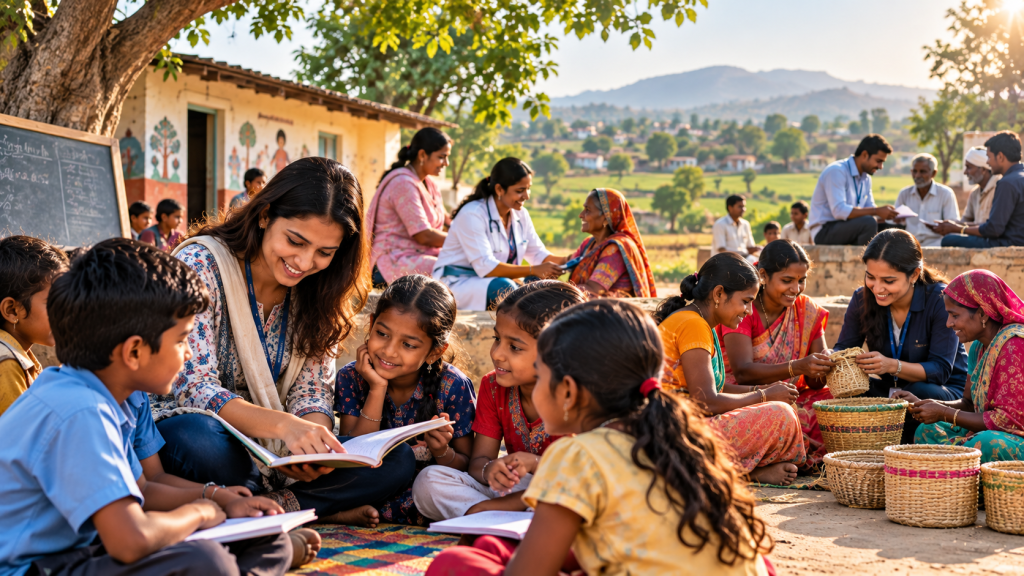
Nonprofit organisations play an important role in India’s social-development ecosystem. Many work directly with communities and focus on issues ranging from education and healthcare to rural development, livelihoods, culture and heritage.
The India Nonprofit Report 2026, published by Dasra, estimates that India’s nonprofit sector includes more than 515,000 registered organisations, around 16 million employees, and approximately ₹11.3 trillion deployed in FY2024 by religious and charitable entities.
The sector’s scale is significant, but numbers alone do not explain its importance.
Many nonprofit organisations operate close to the communities they serve. This gives them an understanding of local realities that can be difficult to replicate through large, centralised programmes.
Their work can involve providing educational support, strengthening livelihoods, supporting women and children, improving access to healthcare, preserving culture or responding to community needs.
At the same time, nonprofits often face challenges around funding, organisational capacity and long-term sustainability.
Supporting the social sector therefore means more than funding individual activities. It can mean helping strengthen the institutions that work every day to create social change.
Strong communities need strong organisations working alongside them.